Find double screw water ring pelletizer for film, filament, and foam
Source 30 double screw water ring pelletizer units from verified manufacturers. Compare capacities ranging from 160 to 1200 kg/h, automation levels, and electrical components like Siemens or ABB for film, filament, and foam applications.
Key considerations
Products List


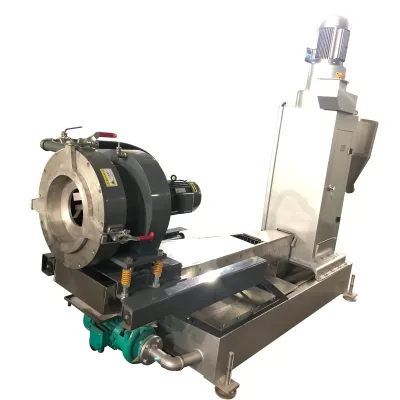


Comprehensive Sourcing Guide
Strategic Sourcing Guide for Double Screw Water Ring Pelletizers
Understanding the Technical Architecture of Water Ring Pelletization
When sourcing a double screw water ring pelletizer, buyers must first distinguish the specific mechanical architecture from single-screw alternatives. The core keyword implies a machine designed for high-throughput extrusion where two intermeshing screws convey, melt, and homogenize polymer feedstock before forcing it through a die face submerged in a cooling water ring. This configuration is particularly advantageous for materials that require intense shear mixing or have difficult rheological properties. In the current market, observations indicate that while many units are labeled as "Automatic" and "Computerized," the specific screw configuration varies. Some listings explicitly identify "Single-Screw" configurations, while others describe "Double Screw" systems. Buyers must verify the screw count in the technical datasheet, as the double-screw design offers superior mixing capabilities for compounds containing fillers or additives compared to single-screw variants.
The extrusion process in these machines typically involves a "Screw Service Life" capable of processing substantial tonnage, with observed benchmarks suggesting capabilities to handle over 100,000 tons of plastic before significant wear occurs. The output is consistently described as "Pellets/Granules," with specific quality metrics such as an "End Pellets Water Content" of approximately 0.4% and an "Inner" moisture level around 0.3%. These figures are critical for downstream applications where moisture sensitivity is a concern. The "Water Consumption" is often designed to be "Circulating," which implies a closed-loop cooling system to minimize waste and maintain consistent pellet temperature. The "Working Line" for inspection is available, allowing buyers to verify the mechanical integrity of the extrusion path before final acceptance.
Compliance, Certification, and Regulatory Standards
Navigating the regulatory landscape for industrial machinery requires rigorous verification of certifications and standards. The supplied data confirms that "CE" certification is a prevalent attribute among listed products, indicating compliance with European safety, health, and environmental protection requirements. Some entries also reference "ISO9001," though the specific version (e.g., ISO9001:2008 or current iterations) should be explicitly confirmed with the supplier, as the provided text contains mixed references. Buyers should not assume that a "CE" mark on a listing automatically guarantees compliance with local regulations in their specific jurisdiction, such as OSHA in the United States or specific national standards in Asia.
The "Standard" section of product listings often cites production capacities like 500kg/hr, 1000kg/hr, 2000kg/hr, and 3000kg/hr, which serve as performance benchmarks rather than fixed regulatory standards. When evaluating compliance, buyers must request the specific test reports that validate the "CE" claim. Additionally, the "Business Type" is identified as "Manufacturer," which often simplifies the certification process as the factory controls the design and assembly. However, the presence of "Customized" attributes means that standard certifications may need to be re-validated if the machine is significantly altered from its base model. Buyers should verify that the "Control System," often described as "HMI PLC" or "P.L.C Control," meets the electrical safety standards of the destination country.
Cost Drivers and Pricing Variables in the Market
The pricing landscape for double screw water ring pelletizers is highly variable, with observed listed prices ranging from $1 to $160,000 USD. This wide spectrum reflects differences in capacity, automation levels, component quality, and customization depth. The "MOQ" (Minimum Order Quantity) is typically low, ranging from 1 to 2 units, which suggests that these machines are often treated as capital equipment rather than high-volume commodity goods. The "Delivery Time" is frequently cited as 30 days, but this can fluctuate based on the "Customization" level and the "Factory Location," which is noted to be within a 2-hour drive from Shanghai in some cases.
Several factors drive the final cost. The "Electric Components" are a major variable; listings mention brands like "Siemens," "ABB," "Ls," and "Omron." Machines utilizing "Famous Brand Motor" and high-tier PLCs will command a premium over those with generic or unbranded components. The "Voltage" is another cost driver, with options for "380V 50Hz or Customized," requiring potential electrical infrastructure upgrades at the buyer's site. The "Packing" method, whether "Wooden Box," "Wooden Pallet," or "Standard Export Packing," also impacts shipping costs and insurance premiums. Furthermore, the "Capacity Range" of 160-1200kg/hr or 200-1200kg/hr directly correlates with the size of the extruder, the power consumption (noted as 93kWh in some contexts), and the overall material cost of the machine.
Typical Applications and Material Compatibility
Double screw water ring pelletizers are versatile machines designed for a broad spectrum of thermoplastic materials. The "Suitable Material" list includes "PP," "PE," "Nylon," and "Pet," while other entries specify "Target Being Recycled Material" such as "PP," "PE," "Pet," "ABS," "PS," and "PC." This indicates that the machine is suitable for both virgin resin processing and the recycling of post-consumer or post-industrial waste. The "Application" scope is equally diverse, covering "Film," "Filament," "Raffia," and "Foam" production. The ability to process "Iron" as a material component in the machine construction itself highlights the robustness required for heavy-duty industrial use.
The "Final Product" is consistently "Pellets/Granules," which are essential for injection molding, blow molding, and extrusion processes. The "Water Content" specification of 0.4% is particularly relevant for applications requiring dry pellets, such as high-performance engineering plastics. The "Double Screw" design is often preferred for "Recycling Machine" applications because it can handle contaminated or heterogeneous feedstocks more effectively than single-screw systems. Buyers should match the specific polymer properties of their target material with the machine's shear rate and mixing capabilities. For instance, processing "Nylon" or "PC" may require higher temperature zones and specific screw geometries that differ from those used for "PE" or "PP."
Supplier Evaluation and Technical Due Diligence
Evaluating a supplier for a double screw water ring pelletizer requires a deep dive into their technical capabilities and service infrastructure. The data indicates that suppliers often boast "More Than 20years" of "Experience" and employ "5guys" (five engineers) dedicated to the project. While these numbers provide a baseline, buyers should verify the specific qualifications of the engineering team and their experience with double-screw configurations. The "After Sale Service" is a critical differentiator; listings promise that an "Engineer Will Be Arranged" and offer "Free Spare Parts," which significantly reduces the total cost of ownership.
Buyers should also assess the "Sample Project" availability, with "Visiting Available" being a key attribute. This allows for a physical inspection of the machine's "Working Line" and the "Inspect Available" status. The "Factory Location" being near Shanghai suggests access to a robust supply chain, but buyers must confirm the actual logistics capabilities for international shipping. The "Control System" being "Computerized" and utilizing "HMI PLC" implies a need for software support and training. Buyers should request a demonstration of the HMI interface to ensure it is user-friendly and supports the specific "Customized" requirements of their production line. The "Condition" of the machine is listed as "New," but buyers must clarify if this applies to the entire assembly or just specific components.
Quality Control and Long-Term Procurement Considerations
Ensuring long-term reliability involves rigorous quality control measures and a clear understanding of maintenance requirements. The "Screw Service Life" of processing 100000t Plastic is a key performance indicator, but buyers should verify the material hardness and heat treatment of the screws to ensure this lifespan is achievable in their specific application. The "Water Ring" cooling system must be designed to prevent corrosion and scaling, especially if the water is not treated properly. The "Water Consumption" being "Circulating" is an advantage, but the filtration and treatment systems for the circulating water must be part of the quality assessment.
Long-term procurement considerations include the availability of spare parts and the ease of maintenance. The "After-Sale Service" of arranging engineers and providing "Free Spare Parts" is a strong indicator of supplier confidence, but the scope of "Free" should be defined clearly in the contract. The "Customized" nature of the machine means that standard spare parts may not fit, necessitating a comprehensive spare parts list tailored to the specific configuration. The "Voltage" and "Electric Components" compatibility with the buyer's local grid is essential to avoid downtime. Finally, the "Standard" production capacities (500kg/hr to 3000kg/hr) should be matched with the buyer's future growth plans to ensure the machine remains relevant as production scales.
Comparative Analysis of Machine Specifications
To assist in decision-making, the following table summarizes key observed specifications for double screw water ring pelletizers based on the provided data. This comparison highlights the variability in capacity, control systems, and material compatibility that buyers must navigate.
| Feature Category | Observation A | Observation B | Observation C |
|---|---|---|---|
| Screw Type | Single-Screw (listed in some) | Double Screw (Core Keyword) | Double Screw (Implied by context) |
| Capacity Range | 200-1200 kg/hr | 160-1200 kg/hr | 500-3000 kg/hr (Standard) |
| Control System | HMI PLC | P.L.C Control | Computerized |
| Electric Components | Siemens, ABB | ABB, Ls, Omron | Customized |
| Voltage | 380V 50Hz | 380V 50Hz or Customized | 380V 50Hz |
| Certification | CE | CE, ISO9001 | CE |
| Target Materials | PP, PE, Nylon, Pet | PP, PE, Pet, ABS, PS, PC | PE, PP, Nylon, Pet |
| Final Product | Pellets/Granules | Pellets/Granules | Pellets/Granules |
| Moisture Content | End: 0.4%, Inner: 0.3% | End: 0.4% | Not specified |
| Service Life | 100,000 tons | Not specified | Not specified |
| Delivery Time | 30 Days | 30 Days | 30 Days |
| Packing | Wooden Box, Wooden Pallet | Standard Export Packing | Wooden Pallet |
| Origin | China | China | China |
This table underscores the importance of verifying specific parameters before purchase. While the "CE" certification and "30 days" delivery time appear consistent, the capacity ranges and component brands vary significantly. Buyers must align these specifications with their production needs and local regulatory requirements. The "Customized" nature of the "Standard" and "Model Number" (e.g., PTC500, PTCS80, CHT) further emphasizes that a one-size-fits-all approach is not viable in this sector.
FAQs
What certifications do double screw water ring pelletizers have?
These machines typically hold CE certification, indicating compliance with European safety standards. Some listings also reference ISO9001, though the specific version requires confirmation from the supplier before purchase.
Which materials can this machine process effectively?
The equipment handles PP, PE, Nylon, PET, ABS, PS, and PC materials. It is suitable for both virgin resins and recycled materials used in film, filament, raffia, and foam applications.
How is the moisture content controlled in the final pellets?
The system achieves an end pellet water content of approximately 0.4% with an inner moisture level of 0.3%. Water consumption is designed to be circulating to maintain consistent cooling and quality.
Can buyers visit the factory to inspect the working line?
Yes, visiting is available as a sample project option. Buyers can inspect the working line to verify mechanical integrity and ensure the machine meets their specific production requirements before final acceptance.
What is the typical delivery time for these machines?
The standard delivery time is 30 days. This duration may vary depending on the level of customization required and the specific factory location, which is often near Shanghai.
Which electric components are used in the control system?
Machines often utilize Siemens, ABB, Ls, or Omron components for their control systems. The voltage is typically 380V 50Hz but can be customized to match local electrical infrastructure requirements.
What after-sale services are provided by the manufacturer?
Suppliers arrange for engineers to be sent for installation and support. Free spare parts are often included, and the business type is identified as a manufacturer with over 20 years of experience.